
US sea drones, ground troops & more: Military experts on Iran
 14.8K views
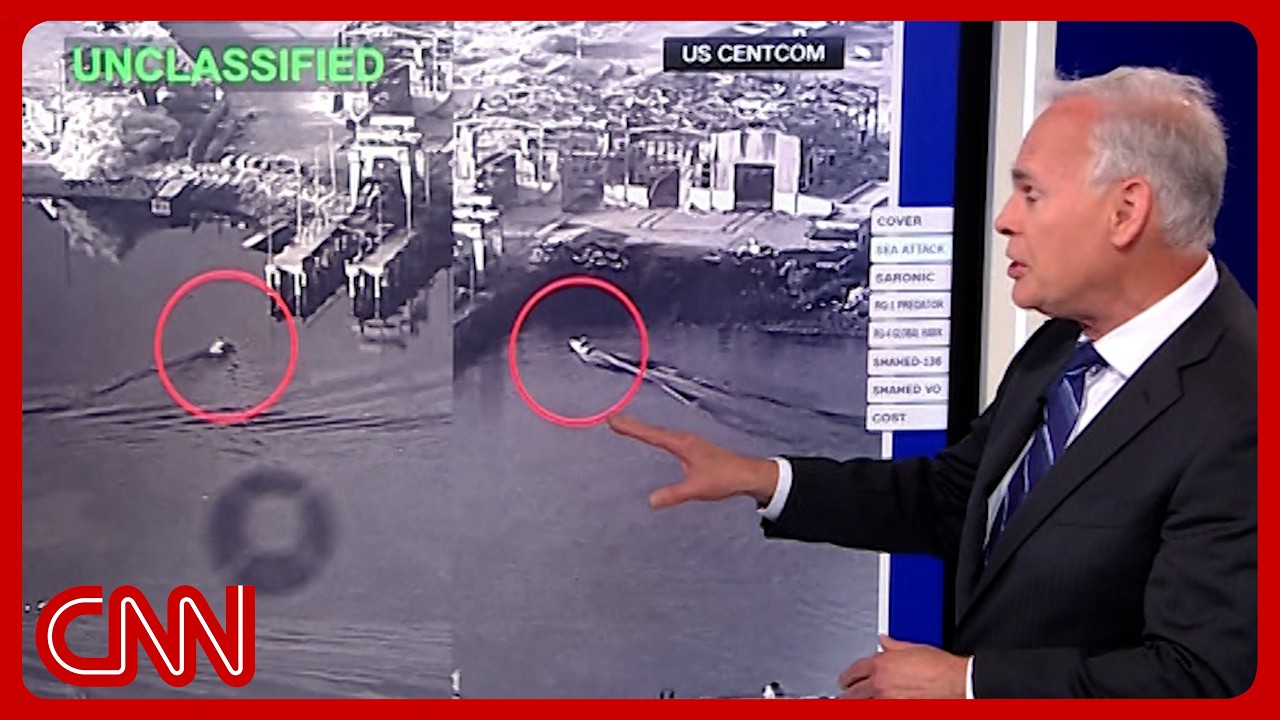
Colonel Leighton, we've heard a lot about drones being used in the Iran war and for the first time, Sinkcom says that the US used a SEA drone in combat. Tell us about the significance of that. Yeah, that's really significant, Pamela. One of the key things here is when you look at the actual. uh explosions that are a part of this. This was a a dry dock that the Iranians used. And. you can see the sea drone moving forward into the dry dock area. And dry docks are used for. maintenance for ships. And here you can see the color view uh from the sea drones perspective uh.
that looks like a mini submarine that uh was in dry dock there. And blowing that up is of course. a very significant thing. It allows us to get in there uh using these sea drones without risking. personnel. It allows us to get in there uh you know without really putting in danger not only. the forces that would have to uh take over this particular area but also air crews potentially. who could be used in in an attack like this. So this is a major achievement uh from the Navy's. perspective and it kind of mimics what's going on in the Ukraine war uh because the Ukrainians.
have been able to use sea drones to great effect against the Black Sea fleet. They've basically. eliminated the Russian Black Sea fleet and they're now going after commercial vessels in the Black. Sea. Uh here what we're doing is we're going after those small boats and those submarines that uh. even many submersibles that the Iranians have. And that of course is a very significant thing. Yeah, it was interesting because I was just overseas on the USS Abraham Lincoln and the military officials. I spoke to said they learned a lot from Russia's war on Ukraine in terms of drone warfare and.
how much it has changed modern warfare. Tell us warfare. Tell us more about that. Yes, one of the. key things here, this is a seronic. This is one of the US Navy's uh under above surface uh drones and. it was actually used in the rescue operation for the Apache uh helicopter crew uh that was forced. to ditch their their aircraft in the Persian Gulf. Uh so it's used for search and rescue missions. They did that for the first time. Uh it's also of course used as an attack platform and because. it is part of that it really is uh you know evolution from what we had before. Uh when you.
look at how we started out with things, we started out with the predator back in the late 90s, early. 2000s that became uh first in the intelligence community was part of uh the mix that they had, but then it was used by the air force not only for reconnaissance purposes, but also for example. using Hellfire missiles and Tomahawk missiles uh to go after uh the various elements that. you know would be potentially providing danger to US forces and also as an offensive weapon.
that it can be used to go after those areas that that would be there. And then of course we also. had the Global Hawk. This was a high altitude platform. The Predator was a low altit lower. altitude platform. This has a huge range of 12,300 nautical miles, can stay up for 34 hours and it uh. you know it is a a good uh launch platform and also a great reconnaissance platform as well. So that's how we started. Uh but then when you go back to some of the things that we can do nowadays.
uh the Seronic is an example of that of vessels that are uh not only surface vessels but then. we also have of course much smaller uh drones that are in the air as well. So the US is using. drones obviously but also Iran is and it's really been trying to use that to its advantage because. they're significantly cheaper and sometimes the US has to use these more expensive weapons. to take down the threat. Tell us about that. That is so true. for example, the Iran Shahed 136. Uh, so it's a relatively small uh aircraft when you look at it, but it's still noticeable. It's 8.2.
feet with its wingspan, has a has a range of about 1,200 miles, costs only $20,000. So that's that's. an important number to keep in mind here. Uh and you know when you see the Shahed uh take off, it. is uh you know an aircraft that uh that can be can be seen uh in a way that you don't uh you don't. normally expect uh aircraft to uh to fly, but it is a fairly effective weapon. Now when you look at.
uh the Shahad 136, we mentioned the $20,000 cost. A standard missile or a Patriot interceptor, they cost between three and four million a piece. So that's the difference. Now, having said this, there are US weapon systems that are being used that cost much less than this. For example, there's a weapon system that's being used on a actual missiles that are in rockets that are. fired by aircraft that costs only $40,000. Not quite the $20,000 that we have with the shahed. uh but much cheaper than three or four million. Brett, you know, you heard Trump tonight threaten.
to knock out all of Iran's bridges and power plants. By the way, this is a threat that he's. made before. Right back when he was talking about wiping a civilization off the map in that in that. era of this uh rhetoric, he had made specific threats against the bridges and power plants. But now here we are again with this sort of a threat. What's your reaction to it now? I think. Kevin just said casting about. I think that's a pretty good way to put it. Uh both the United.
States and Iran. I think you just see casting about on on both sides. I think the problem with. that threat is problematic on its face, but also I I'm not sure the Iranians take it seriously, but if they do take it seriously, uh Aaron, again, it is the Revolutionary Guard that is in charge in. Thrron, and they will strike uh infrastructure in the Gulf. I mean, that is basically what they. said. I think they have proven that demonstrated willingness and capacity to do that. So, then. you're in a war targeting each other's civilian infrastructure, and that can really uh uh damage.
the global economy. That's that's the that's the problem of one of many problems here. Yeah. Yeah. And I as we all remember right when desalination plants were suddenly on on the table right when. that that's sort of what brought this whole thing to a halt that that would be a global economic. catastrophe uh with an incredible loss of civilian life. General Kimmit Trump was asked tonight about. the possibility of a ground campaign. Right. So once again bridges and and and power plants being. threatened but also uh ground troops. Here's the exchange. Are you ruling out a ground campaign in.
a limited capacity? I don't I don't want to say that either, but I would say no if I if I thought. it was appropriate. It's like sometimes you need a ground campaign, but we have other people. that will do the ground campaign for us. Okay, General, I have I have many questions from this, but I guess let's just go with two of them. First of all, what would a ground campaign at this point. for the US actually mean? Right, we're now in month five. And when he says someone's going.
to do it for us, I mean, who is that? Are we back to the Kurds again? Well, well, first of all, I'd. just like to make a comment about uh bridges and infrastructure. In fact, I think it's important to. note that uh bridges and infrastructure that are primarily being used to support military forces. uh are legitimate military targets. I didn't hear anything about civilian infrastructure. I didn't. hear anything about civilian bridges. So, let's hope we're going to stay focused on the military. targets. Ground campaign, uh, certainly I don't think the president is talking about attacking.
into Thraran. Uh, but a ground campaign could certainly be something like going into Kashiman. It could be going into uh, Car Island. Uh, I certainly hope we don't do that. I think they're. better alternatives. But it's also important to note that what the president was doing was. not ruling in he was just not ruling out ground forces to keep his options open, right? I mean, and in a sense, I guess that's back to casting about Brett, right? Keeping everything on the.
table. I I want to play for you, Brett, some of what Trump said about this issue with the toll, right? Because yesterday that really stunned the world, right? After the US had said it's. international waters, you can never do it. It's against all international law. Rubio has been. completely clear on this issue. Then suddenly Trump comes out and says he's going to charge. every ship a 20% fee and now he's changed his mind. Here's part of why he said he's doing. that. I put it out yesterday. I thought it was good. I was called by different people, different.
countries, kings and amirs and all of the people that we all know and we all love and they've been. frankly they've been very strong partners and they said we'd love to do it a different way. So Brett, what do you think happened to make the president in less than 24 hours reverse course on. something as specific and major as a 20% toll on every ship going through the straight and the US. taking over the straight and providing all the security so those ships could transit? Well,
I'd say two things. I think the one thing the all the Gulf states including like Oman that works a. little closely with Iran, they are totally opposed to Iran's uh claim of sovereignty over the strait. and Iran's claim that they will charge a fee. So the Gulf is united kind of with us against. that. So then for the president to come out and say actually we're going to protect it and we'll. charge an even higher fee uh was was completely contradictory and counterproductive to everything. we're trying to do. I'd secondly say, Aaron, that you know, kind of that'd be a good problem to have.
if we were able to guard the straight and protect shipping. The issue here is that Iran is using. the kind of ancient uh advantage of terrain and the modern advantage of drone warfare. And these. drones can be fired from a thousand kilometers away, even farther away, and hit a slowmoving. tanker. And that is what they're doing to hold the straight hostage. It is very hard to stop. I dealt. with this in the in the last White House in the Red Sea when the Houthis and Iranian proxy group. was targeting ships in the Red Sea. We had a naval coalition. We It's very difficult to stop. So,
uh I' I'd like to know how we're going to be the guardian of the strait. I think that. would be great if we could do it, but it's a very difficult equation as General Kim, I think, knows. extremely well. And General Kim, the Iranian army is also saying they're going to respond. Okay. Uh. there they and they've already claimed, again, I'm not sure whether this has been true, but they've. obviously shown an ability to do real damage to US bases, US mil missile interceptors and aircraft. Uh they now say they struck a US base in Jordan where F-18 fighter jets are stationed and that.
they're going to continue doing this uh until final victory is achieved. General, you know, it can be it can almost sound like a tit for tat until suddenly people die. I mean, how concerned. are you tonight given where this is at this moment about the risks to the tens of thousands of US. troops that are in the Middle East now? Well, I I think both Brett and I are concerned about that. significantly because again, all we need is one mistake made by an air defense artilleryman who.
misses a missile coming in. I mean, we saw that in al-Assad inside of Iraq where we luckily did. not lose a significant number of troops. But when you have a large concentration of them as we do in. Kuwait, out of date in U in Qatar and some of the other bases in UAE, that could certainly happen. Uh listen, I think it's important to go back to Brett's comment. It is clear that if the United. States is the unilateral uh protector of the Gulf uh of the straight of Hormuz, that will not work.
The fact is we are belligerent in this conflict and for us to try to control it is. a war situation. Either they have it or we don't. But as we did with the counterpiracy coalition. uh and we did in the tanker war 198 1981 to 1988 we used non-belligerance in that operation. This is a great opportunity for the British, the French, the Germans to come in and run a maritime.
escort operation through the straight hormuz. It tells the Iranians you have a choice. You can. either let these people uh take the commercial traffic through or you can fire on them and at. this point you now have a war with uh Germany uh the United Kingdom and France. Now I think we all. understand why the allies have not been rushing to our assistance in this but there are options other.
than a unilateral operation targeted by the US. We're on routes connected to the city of Bandar. Abbas which is home to an Iranian military naval base as you well know. What does that signal to. you about the US strategy that's unfolding right now? Two things. Wol. First, it is going to. attempt to cut off to kill the assets that could be used to close the straight of Hormuz. I've been. to Bonder Abbas before the revolution. Obviously, it's a very important naval port for the Iranians.
and cutting it off has high military utility. So, point one, go after the places where the Iranians. have weapons systems that help them close the straight. Point two, in general, going after. infrastructure like bridges, roads, puts economic pressure on Iran. I think that is part of the. administration's strategy here to get Iran back to the table. In a phrase, what they're doing is.
escalate in order to deescalate, meaning go after economic targets, military targets, put pressure. on more attacks with the hope that you can then deescalate and the Iranians will come back to. the table. That's the strategy. And as you know, Iran is now retaliating big time with attacks on. various US military assets across the Gulf region. The Iranian military claims it targeted a US air.
base in Qatar and for the first time a US base in Syria. It also says it destroyed a long range. radar system and several US refueling aircraft. If all of this is true, Admiral, how does this. impact the US military's abilities in the region? So far, we have sufficient combat power in order. to overcome the level of strikes you're seeing from Iran. And let's be honest here about the. numbers. The US is launching dozens and dozens of strikes a day at this point. Far less than during.
the initial wave, but 100 200 strikes a day. Iran is responding with 10 maybe 15 strikes. So over. time that's going to favor the US military capacity to continue these strikes. However, it does show the Iranians are increasing their ability to go after their neighbors, that ought. to concern us because if they start going after Gulf oil and gas infrastructure, that'll have.
big economic downside for the Western economies as well. Yeah. So far, they're going after US. military sites in these friendly Arab Gulf nations like the United Arab Emirates, uh, Qatar, Kuwait, uh, Oman, elsewhere in the region. These are all very close friends, allies of the United States. The US has major bases in the United Arab Emirates and inqatar at Camp Asalia, the yellowade air.
base. I've been to those facilities. Uh, they're really home to much of the US military central. command in that region. and the Iranians are keep attacking those US sites. Now, this this is very. significant, isn't it? It is indeed. And I want to draw a line under one other kind of troubling uh. item that's surfacing. And that is Iran starting to talk about closing not the straight of Hormuz, which they've effectively done, but closing what is called the Bob El Mandeb. It's at the very.
bottom of the map you're showing at the bottom of the Arabian Peninsula, the bottom of the Red Sea. They've got the Houthis there who have capability to attack commercial shipping. If you close that. choke point, that closes effectively the Suez Canal right under the word Israel on your map. That is a major global choke point just like the straight of form moves. If the Iranians can push. the Houthis into doing that, you've opened a new front, a western front, if you will, in this war.
So, that is one to watch and one to be concerned about in the weeks ahead. In his address, his prime time televised address last night, the president said one sentence, one sentence. and it was a total of about 7 seconds, we checked, related to the war with Iran uh in his nearly 27. minute speech overall. when he first announced he was going to give in a televised address, I thought it would be on the war with Iran, but it wasn't. It was on election uh so-called election.
interference. Was that in your view a missed opportunity for President Trump? It was. And uh. the numbers are very clear on this. This war is unpopular across the entire political spectrum. President Trump's own popularity overall is as low as it's been throughout his two terms of. the presidency. And I think Americans just don't have a sense of what's the exit strategy, what's.
the endgame here. And when you start getting those questions from the public, that's the time to do. that nationally televised address and reassure people and tell them you have a plan and tell. them what the next step is. That's I'm with you. That's what I was hoping to hear when I caught a. snippet of a televised presidential address. It's about elections. Those are important, but I think the public would at this point like to hear what's the next move in the Middle.